One design system
I identified the need for the HMRC Design System and led the team that built it, to standardise user interface patterns.
The need for a design system
At the time, HM Revenue & Customs (HMRC) had over 50 live digital services. Each service used slightly different design patterns. A design pattern is a standard way to build a part of a page, such as a form field. There were also rogue components, which were parts that did not follow any shared standard. There was a lot of design and technical debt too. This is the cost of old shortcuts that make later work harder.
So I started and led a multidisciplinary team of Designers and Developers. The team listed and documented the design patterns. We then built them into the HMRC Design System. I believe most of the services went on to use it.
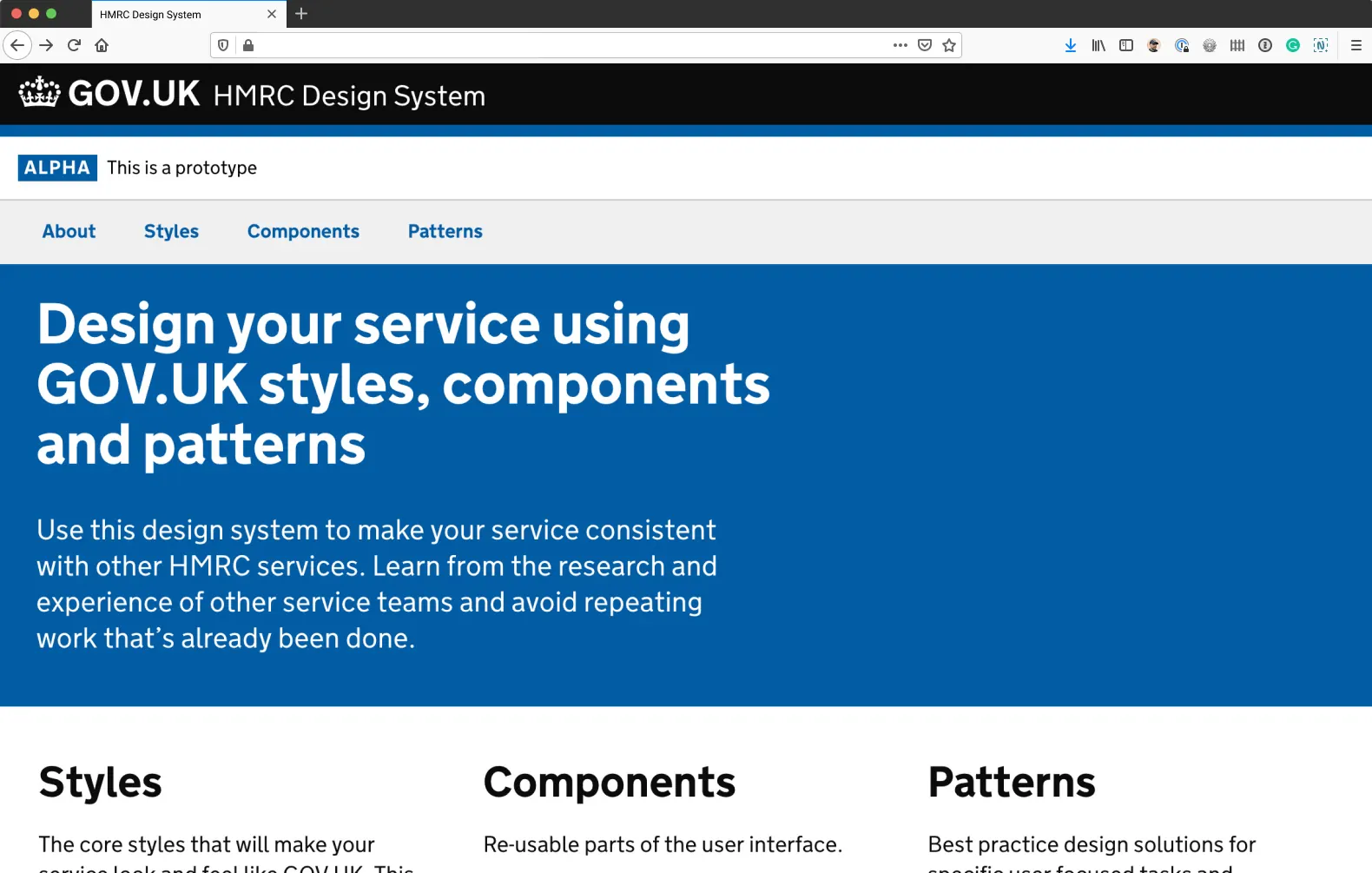 A screenshot showing how the HMRC Design System looked when it launched.
Finding out what we had
To understand how many different design patterns the services used, I ran workshops with other designers across HMRC. We audited the digital services together. The results became the basis of the backlog, a list of work still to do. We shared the backlog openly across government.
I set up a working group within HMRC to manage the backlog of patterns and work through it. I led its weekly meeting. I also developed the process for creating new patterns at HMRC.
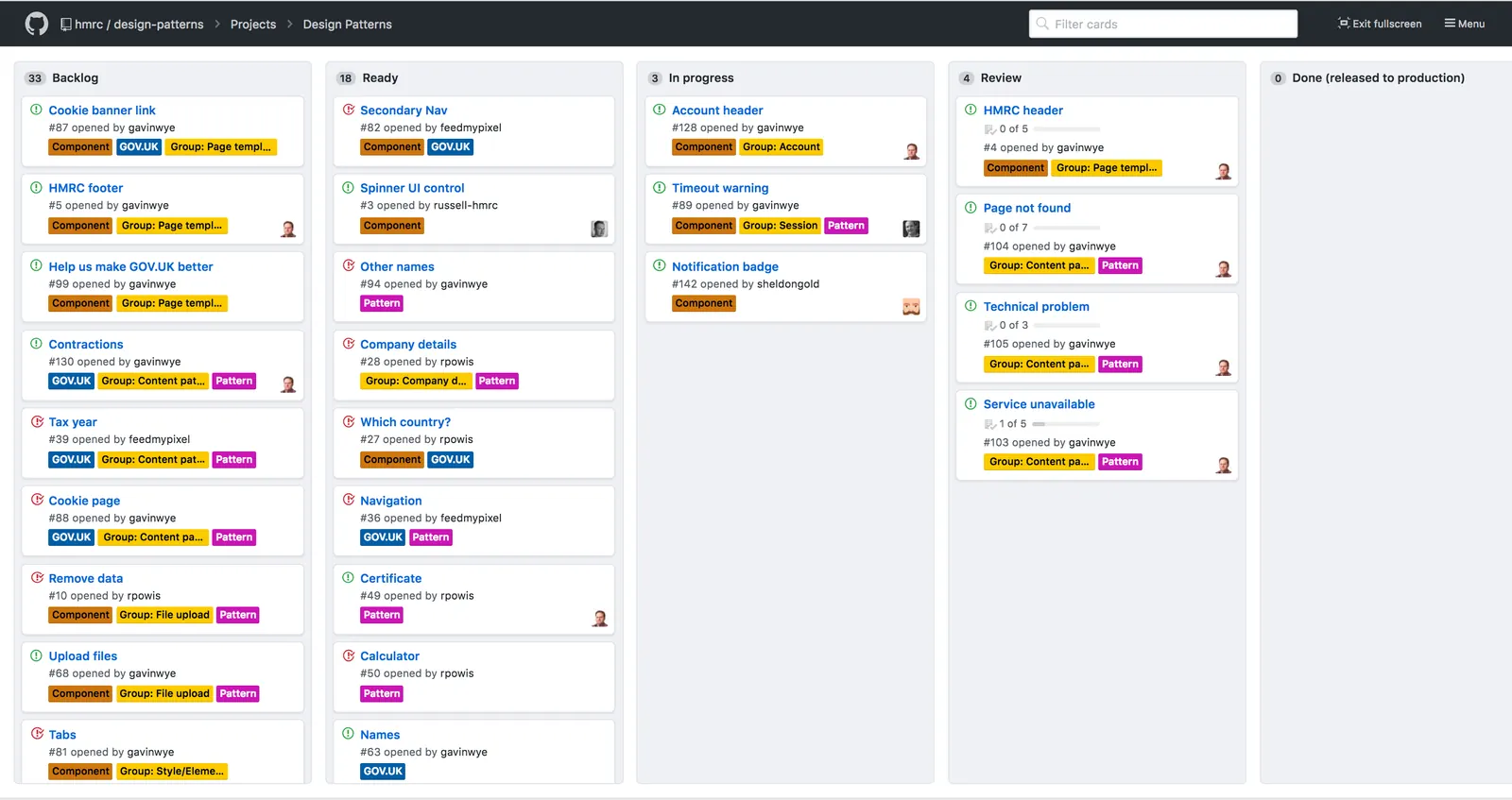 GitHub project board showing the backlog.
Sharing it across government
I saw many chances to work with the Government Digital Service (GDS) on research and design. I built a good working relationship with the Design System team at GDS. With the Head of Interaction Design at GDS, I started weekly calls across government. The calls let departments share knowledge and support each other. I then worked closely with GDS to turn this group into a cross-government working group to curate and maintain the Design System.
Inside HMRC, I became the advocate for the design system. I encouraged teams and Designers to use it and to add patterns to it. That way the patterns could be shared with the rest of government. Some of the HMRC patterns went into the GOV.UK Design System.
The HMRC Design System is still in use today, and it has matured since.